
China is heavily investing in artificial intelligence, cloud computing, and other digital technologies to expand its economy. A crucial component of this strategy is the rapid development of data centers to enhance computing capabilities. These extensive server hubs consume significant amounts of energy and demand vast quantities of water daily to dissipate the heat they produce.
This escalating demand for water by data centers poses a challenge as it competes with essential human needs such as agriculture and drinking water. To mitigate the issue of humidity damage to equipment, many firms choose to locate their data centers in some of the world’s arid regions, including Arizona, areas in Spain, and the Middle East, as reported by SourceMaterial and the Guardian. In an innovative move to combat these water challenges, China commenced the construction of a wind-powered underwater data center off Shanghai’s coast in June, located approximately six miles from one of its AI centers. [Read more: What Do Google’s AI Answers Cost the Environment?]
“China’s forward-thinking strategy indicates a significant shift towards sustainable digital infrastructure, potentially setting new international standards for eco-friendly computing,” comments Shabrina Nadhila, an analyst at Ember, a think tank focusing on energy.
Supporting Science Journalism
If you appreciate this content, please consider supporting our distinguished journalism by subscribing. Your subscription helps maintain our ability to deliver influential stories about the breakthroughs and concepts that are shaping our world today.
Maintaining Data Center Temperature
Data centers are crucial for storing data and performing complex computations for increasingly automated businesses. These centers, packed with servers operating continuously, consume large amounts of electricity and water to prevent heat-related damage to their equipment and data loss. Constant cooling is essential.
About 40 percent of the power a typical data center consumes is dedicated to cooling. This energy predominantly cools water, which is then either sprayed into the air around the servers or allowed to evaporate close to them, reducing the ambient temperature. Sources of this water could be underground aquifers, nearby lakes, or even treated wastewater.
An artist’s rendering of a wind-powered underwater data center being built off the coast of Shanghai.
Shanghai Hailanyun Technology
Instead, undersea data centers utilize pipes to channel seawater directly through a radiator attached to the back of server racks, effectively removing the heat. The Shanghai project, spearheaded by Hailanyun, is reportedly 30% more energy-efficient than traditional data centers, thanks to the natural cooling properties of the ocean, according to a study with the China Academy of Information and Communications Technology.
Additionally, the data center will be powered by a nearby offshore wind farm, expected to supply 97% of its energy needs, according to Hailanyun spokesperson Li Langping. The first phase, featuring 198 server racks capable of accommodating between 396 and 792 AI servers, is expected to launch in September. Despite its smaller scale compared to typical land-based centers, the Shanghai underwater facility aims to provide substantial computational power, potentially completing tasks equivalent to training GPT-3.5 in just a day.
Overtaking the U.S.
Central to Hailanyun’s $223-million investment in Shanghai is a technology initially developed by Microsoft over a decade ago known as Project Natick. Microsoft’s underwater container, deployed off the coast of Scotland, housed over 800 servers and demonstrated the viability and sustainability of submerged data centers after surfacing two years later.
Microsoft reported fewer equipment failures compared to traditional data centers due to the nitrogen-filled, sealed environment that reduces corrosion. The absence of human activity also minimized physical disturbances, enhancing the longevity of the hardware. Although Microsoft has currently paused Project Natick, the insights gained continue to inform future research on data center sustainability and reliability.
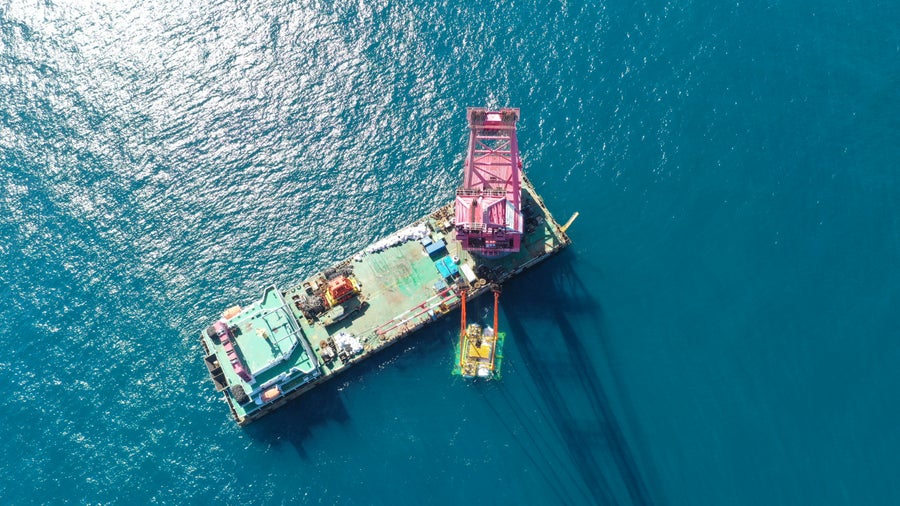
Hailanyun places the first phase of its underwater data center into the ocean off the coast of Hainan in December 2022.
Shanghai Hailanyun Technology
Hailanyun aims to surpass American corporations by leveraging government support to scale up its offshore, wind-powered underwater data centers if the Shanghai pilot proves successful. According to Zhang Ning, a postdoctoral researcher at the University of California, Davis, Hailanyun transitioned from a test project in Hainan to commercial operations in less than 30 months—a pace not attempted by Microsoft’s Project Natick.
Environmental Concerns
Despite the potential benefits of underwater data centers, there are environmental concerns. For instance, Microsoft researchers observed slight localized increases in sea temperatures around their data center pod, although the effect was minimal. However, other studies suggest that during marine heatwaves, these centers could exacerbate local temperature rises and reduce oxygen levels in the water, potentially affecting marine life.
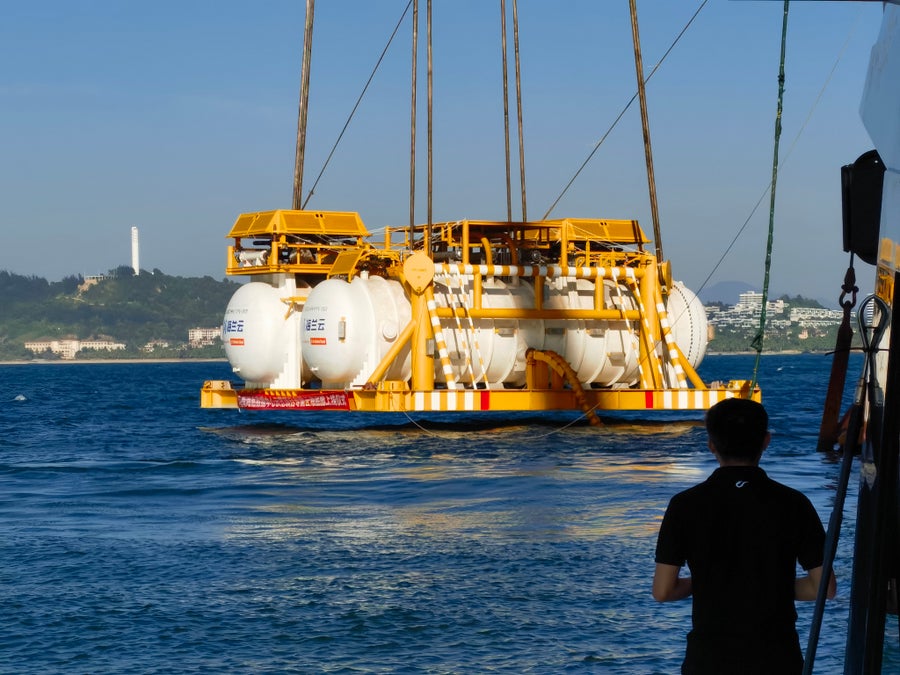
Two water-tight containers carrying servers and other equipment are lowered into the ocean off the coast of Hainan as part of China’s first commercial underwater data center in November 2023.
Shanghai Hailanyun Technology
Security is another potential issue. A 2024 study highlighted that certain underwater noises could destroy these facilities, raising concerns about possible sabotage. In response, Hailanyun asserts that its facilities are environmentally safe, referencing a 2020 test in southern China that showed minimal thermal impact on surrounding waters.
The concept of undersea data centers is gaining traction globally, with countries like South Korea, Japan, and Singapore exploring or planning similar projects. Zhang notes that the adoption of this technology in other coastal regions depends not just on technical viability but also on how quickly regulatory, ecological, and supply chain challenges can be addressed—challenges that China is currently
Similar Posts
- Nvidia Unleashes Blackwell-Based Servers: 200 Configurations Hit Full Production!
- French Nuclear Submarine Tests American Underwater Drone: Revolutionary Drill Near Toulon!
- Russian Firm Launches AI Systems with Domestic CPUs, Still Uses Foreign GPUs
- Ex-Intel CEO Picks China’s DeepSeek Over OpenAI for New Startup!
- China’s AI Ecosystem Rises: Positioned to Dominate Global Tech Scene

Cameron Aldridge combines a scientific mind with a knack for storytelling. Passionate about discoveries and breakthroughs, Cameron unravels complex scientific advancements in a way that’s both informative and entertaining.