
Although she doesn’t appear often in the early stages, Abby Anderson’s presence is profoundly felt throughout the initial segments of The Last of Us Part II.
Players briefly control Abby in two early vignettes that introduce her and her childhood friend Owen, and later when she’s rescued from a swarm of Infected by Joel and his brother Tommy from Part I. Beyond these moments, the gameplay primarily revolves around Ellie, who has matured since the previous game where she was the secondary protagonist and pivotal plot element.
Abby’s sparse early appearances are deliberate, as she was hardly featured in the promotional content prior to the game’s release on PlayStation 4, only getting a detailed character trailer about six months post-launch.
This strategic choice by director Neil Druckmann and co-writer Halley Gross turned out to be bold and impactful, as it deeply influenced gamers’ perception of Abby and the overall reception of the game.
In essence, Abby Anderson is the antagonist, the narrative’s driving force, and the true main character of Part II.

Following her introduction, players assist Abby as she and her companions, Owen and Manny, along with Owen’s partner Mel, find shelter from a blizzard in an outpost led by Joel and Tommy. The tension escalates quickly when Joel reveals his identity, leading to a dramatic and violent confrontation initiated by Abby.
“Y’all act like you’ve heard of us or something,” Joel remarks to an unsettling silence.
After a moment, Abby responds, “That’s ‘cause they have,” followed by the shocking sound of a shotgun blast that critically injures Joel.
As Joel endures agonizing pain, he challenges Abby to just finish the job, leading her to pick up a golf club and menacingly delay his end, stating, “You don’t get to rush this.”
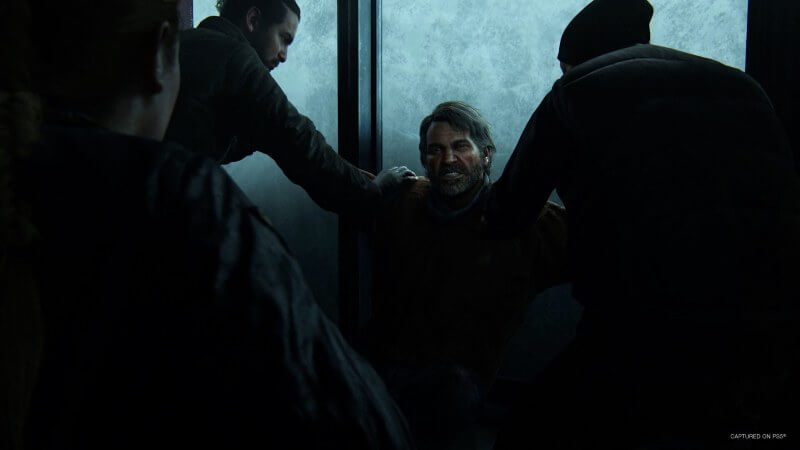
Abby’s line here is symbolic of the entire narrative of Part II . No matter how swiftly players regain control over Ellie and seek vengeance, the expected emotional release is elusive, and the journey is filled with further violence and loss.
In retaliation, Ellie kills Owen and Mel, and their dog Alice. Abby tracks her down, leading to a tense standoff where Ellie is powerless to save her surrogate uncle Tommy, heightening the cycle of revenge and leaving Ellie’s thirst for vengeance unquenched.
Behind Abby’s complex character is the skilled actress Laura Bailey, whose career in voice acting spans from iconic anime characters to influential video game roles. Her range, from youthful vigor to sultry tones, brings depth to Abby, who is portrayed with a unique blend of masculine and feminine traits rarely seen in female video game characters.
This nuanced portrayal allows Abby to embody a physicality and presence that challenges traditional gender roles within the gaming industry. Unlike typical female characters, Abby’s substantial physical presence isn’t just for spectacle but is integral to her character’s development and the story’s progression.
Through Laura Bailey’s performance, Abby becomes a vessel for exploring themes of revenge, redemption, and the human capacity for both compassion and cruelty, making her one of the most compelling characters in the narrative of The Last of Us Part II.
The narrative then takes players back in time, revealing critical moments from Abby’s past, including her relationship with her father, a Firefly surgeon, and the events leading up to her seeking vengeance against Joel. This backstory adds layers to Abby’s character, setting the stage for a deeper understanding of her motivations and the tragic cycle of violence perpetuated throughout the game.
As the game unfolds, players witness the consequences of the characters’ actions, shaped by loss and the harsh realities of their world. This narrative approach not only enriches the game’s world but also challenges players to reconsider their perceptions of right and wrong, making The Last of Us Part II a profound statement on the human condition.
By exploring these themes through Abby’s eyes, the game crafts a narrative that’s not only about survival but also about finding humanity in a broken world. This makes Abby’s journey an essential part of understanding the game’s complex moral landscape, providing a compelling look at the cycles of violence that define the post-apocalyptic world of The Last of Us.
Madeline Blondeau has been writing about games since 2010. She’s written for Paste, Anime Herald, Anime News Network, CGM, and Lock-On, among others. In addition, she has written, hosted, and recorded film criticism podcast Cinema Cauldron. Her published fiction debut is due out between 2026 and 2027. You can support her work on Patreon, and find her on BlueSky @mads.haus.
Similar Posts
- The Last of Us Season 3 Focuses on Abby: Can HBO Deliver a Fitting Finale?
- Five Must-See Highlights from the PC Gaming Show: Discover What’s New!
- Ted Lasso Finale Tribute Captures Series’ Essence: Eternal Love for Sport Defines the Team
- Just 4 Episodes: A Raw Look at Domestic Violence and Justice System Failures
- New Crime Drama on Netflix: Just 8 Episodes, Perfect for Binge-Watching! From ‘Schitt’s Creek’ Creator

Avery Sandridge has an unmatched love for storytelling and the screen. From detailed analyses of your favorite shows to behind-the-scenes scoops, Avery offers a fresh and engaging take on everything TV series.